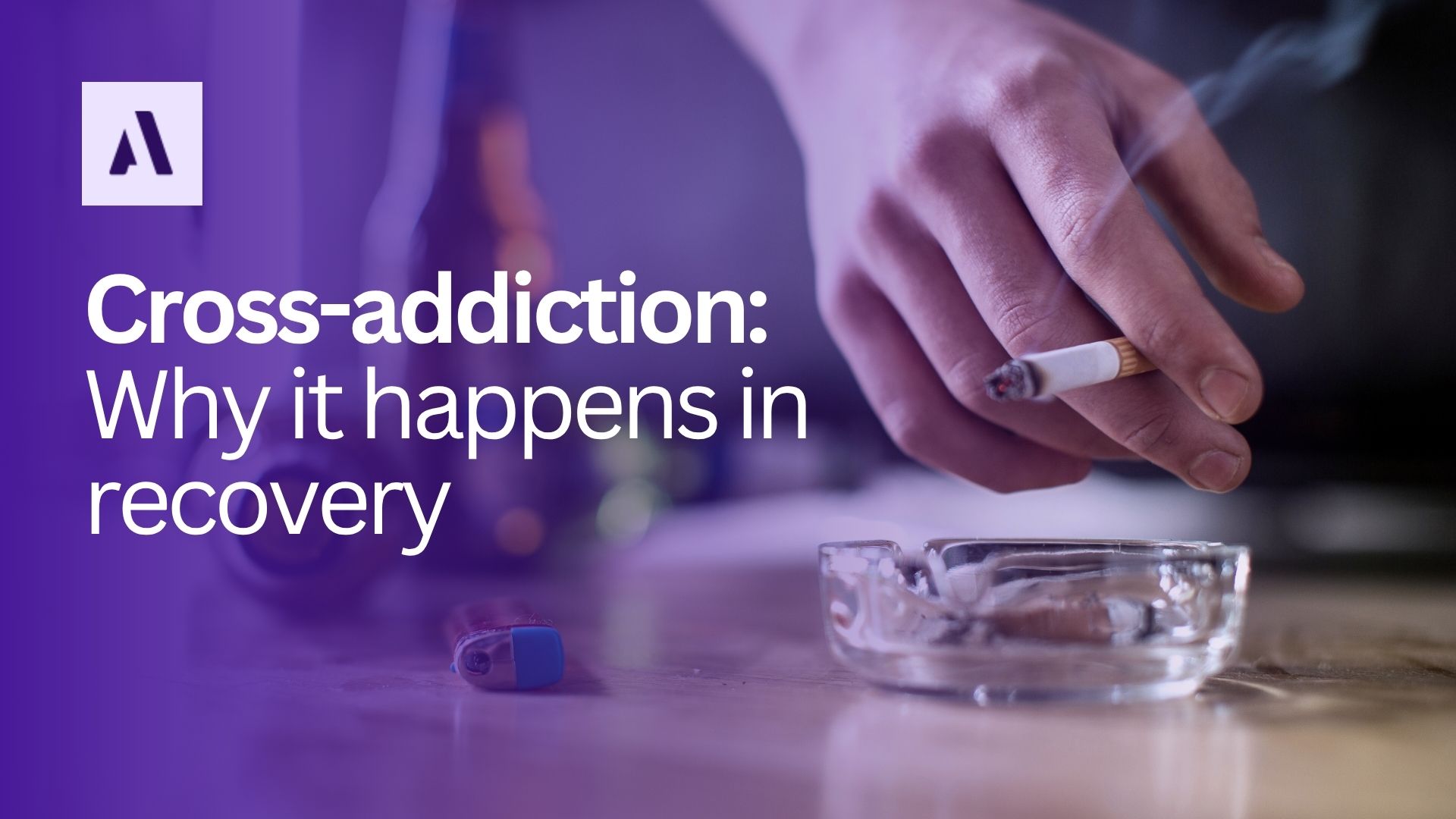

Recovery from addiction can involve more than stopping a particular substance. Some people may begin relying heavily on another substance or behaviour, particularly if it serves a similar purpose, such as managing stress, escaping difficult emotions or seeking relief. This pattern is sometimes described as cross-addiction or addiction transfer. In this blog, we’re looking into cross-addiction and why it happens in recovery.
What is cross-addiction?
“Cross-addiction” is a term sometimes used to describe a pattern in which a person develops problematic use of another substance or behaviour while recovering from an existing addiction. It is not a formal diagnosis in itself, and not every behaviour change represents a new addiction.
Cross-addiction can highlight the importance of receiving appropriate support throughout recovery. People can take part in detoxification, which involves stopping or reducing substance use with appropriate support to help manage withdrawal symptoms and reduce the risk of complications. However, this does not mean that the factors that may have contributed to or maintained the addiction are also dealt with.
Recovery involves addressing the factors that may have contributed to or maintained the addiction, not just focusing on the removal of the substance.
It’s really important to remember that cross-addiction or addiction transfer does not mean that recovery has failed.
It also does not mean that every habit is a sign of addiction. If you are concerned, you should speak to a healthcare professional. This is really important as addiction can quickly lead to a loss of control, compulsive behaviours and other negative effects.
“Recovery isn’t just about stopping substances; it’s also about healing the patterns that make us look for something else to replace them.” – Danielle Robinson, Director of Services at Acquiesce Rehab.
Why does cross-addiction happen?
Cross-addiction occurs for several reasons. It’s really important to be aware of these so that you can treat cross-addiction effectively.
The brain’s chemistry
When people use substances over a prolonged time period, it can drastically alter the brain’s chemistry. This can change the brain’s neural pathways, ultimately impacting its reward system.
Repeated substance use can change brain circuits involved in reward, motivation, learning and self-control. Dopamine plays an important role in these processes, helping the brain learn which experiences are rewarding and increasing the likelihood of repeating them. Over time, these changes can contribute to cravings and compulsive substance use.
Underlying emotional issues
For some people, substance use may become a way of coping with mental health difficulties, stress or other difficult emotions. Over time, this can contribute to patterns of problematic substance use.
Of course, the danger here is that the relaxation only lasts while the person is using the substance or performing the addictive behaviour, and the symptoms of their mental health condition come back soon after the alcohol’s effects wear off.
People may use substances to deal with depression, anxiety and other difficult emotions. Stopping the substance may improve some symptoms, particularly when substance use is contributing to them, but it may not resolve an underlying mental-health condition. Where mental-health difficulties and substance use co-occur, both may need appropriate assessment and treatment.
Seeking relief
Some people may use substances less for the pursuit of a ‘high’ and more for the effects they experience, such as temporary relief from stress, emotional discomfort or difficult thoughts. Over time, relying on substances in this way can contribute to dependence and problematic use.
Learned habits
Learned habits and behaviours can play a role in the development and maintenance of problematic substance use. Different environments, emotions or situations often trigger these addictive behaviours.
Rehab can help people identify these triggers, develop strategies for managing them and reduce the risk of returning to problematic substance use. Rehab can help a person to understand addiction, manage emotional discomfort associated with triggers and maintain meaningful relationships.
Examples of behaviours that may become problematic during recovery
Everybody is different, and there is no one common path when it comes to addiction and recovery. These are some examples of substances or behaviours that may become problematic during recovery.
- Alcohol to drugs: Someone stops drinking but begins misusing another substance
- Drug addiction to alcohol: Someone stops using drugs but starts drinking heavily as a perceived safer alternative
- Substance addiction to gambling addiction: Gambling may provide excitement, stimulation, escape or reward
- Substance use to problematic eating behaviours: Emotional eating or binge eating can sometimes become a substitute coping mechanism
- Substance use to compulsive exercise: Exercise can be highly beneficial in recovery, but compulsive exercise may become problematic when driven by anxiety, control or self-punishment
- Substance use to excessive work: Excessive work can become a way to avoid emotions, relationships or uncomfortable aspects of recovery
It’s really important to recognise that regular participation in these activities does not always indicate an alcohol or drug addiction. As we mentioned previously, if you are concerned about one addiction for yourself or for someone you care about, you should seek personalised support.
Is cross addiction the same as relapse?
Cross-addiction refers to a pattern in which a person develops problematic use of a different substance or behaviour during recovery.
Relapse generally refers to a return to problematic use of a substance after a period of reduced or discontinued use. A brief lapse does not necessarily mean that someone has experienced a full relapse, particularly if they can return to their recovery plan and seek support.
Both situations can indicate that additional support or a review of the person’s recovery plan may be beneficial. Recognising these signs early can be highly beneficial when it comes to gaining the right support.
What are the signs of addiction transfer?
It can be helpful to familiarise yourself with these signs if you are currently going through addiction treatment, whether that’s detox or rehabilitation. This is not an exhaustive list of potential signs that you may benefit from cross-addiction treatment.
- Increasing preoccupation with a new substance or activity
- Feeling unable to stop or reduce the new substance use or behaviour despite wanting to do so
- Using the behaviour primarily to escape difficult emotions
- Increasing frequency or intensity of substance use
- Neglecting responsibilities or relationships
- Experiencing anxiety, irritability or distress when unable to engage in the new substance use or behaviour
- Hiding or minimising the behaviour
- Continuing despite negative consequences
- Participating in dangerous and other compulsive behaviours
- Thinking about the new behaviour in ways similar to previous addictive patterns
Is anyone at higher risk of addiction transfer?
Addiction transfer can happen to anyone, but some people may have factors that increase their risk. Factors that may increase the risk include, but are not limited to:
- Previous history of addiction
- Multiple previous substance dependencies
- Untreated trauma or mental health difficulties
- High levels of stress
- Difficulty regulating emotions
- Limited support network
- Strong reliance on substances or behaviours for coping
- Exposure to environments associated with previous addictive behaviour
While these may increase the risk of addiction transfer, they do not mean that someone will definitely struggle with it or another addiction. Addiction transfer is different to dual diagnosis. Read more about dual diagnosis here.
How can the risks of addiction transfer be reduced?
One important way to reduce these risks is to address the factors contributing to substance use, while developing practical strategies for managing triggers, cravings and difficult emotions. This may mean receiving treatment for mental health conditions or working on promoting healthy relationships.
Many people find it helpful to develop healthy coping strategies when dealing with addiction recovery. These may include spending time with loved ones, exercising in moderation, making connections, completing meaningful activities and much more.
It’s also important to note that recovery isn’t a linear process. It may require ongoing support, and that is OK. Many individuals seek out therapy, counselling or attend community groups to support them on their recovery journey.
There is no 100% sure way to prevent cross-addiction, but seeking advice in the beginning can promote early recovery.
How Acquiesce can support your recovery
A personalised relapse prevention plan can be an important part of ongoing recovery. At Acquiesce, we begin working with clients on this before they leave the centre. This can help you manage minor setbacks more easily and stick to your recovery plan.
A great rehab centre should also offer high-quality aftercare. At Acquiesce, we provide all clients with access to our exclusive members’ area, designed for those who have experienced the transformative journey of Acquiesce to share successes and challenges with others. Read our blog on why aftercare is just as important as rehab.
We can support you in several ways, from personalised treatment plans to teaching you CBT techniques and providing structured residential care.
At Acquiesce, our team is highly skilled in supporting individuals with addiction. We provide a range of services and activities to help you heal holistically, focusing on mental, physical and spiritual recovery.
Our treatment plans look beyond the immediate addiction and focus on why the addiction developed and how we can form healthier habits for you.
If problematic substance use or behaviours are not addressed, they may contribute to issues such as relationship difficulties and negative effects on wellbeing.
Seeking support for cross-addiction
Addiction recovery is not about achieving perfection. It’s about being realistic with your goals and developing healthier coping strategies that can be used in everyday life.
Depending on the substance and individual circumstances, treatment may also include medication alongside psychological therapies, peer support and other recovery services.
Having an understanding of addiction transfer can be the key to receiving prompt support and reducing the intensity of the addiction. If you are worried about yourself or someone else and cross-addiction, you must seek professional support.
For some people, cross-addiction may be linked to an underlying need for relief or emotional escape. Professional treatment can help individuals understand their triggers, develop healthier coping mechanisms and build sustainable recovery. Contact us today for personalised support.