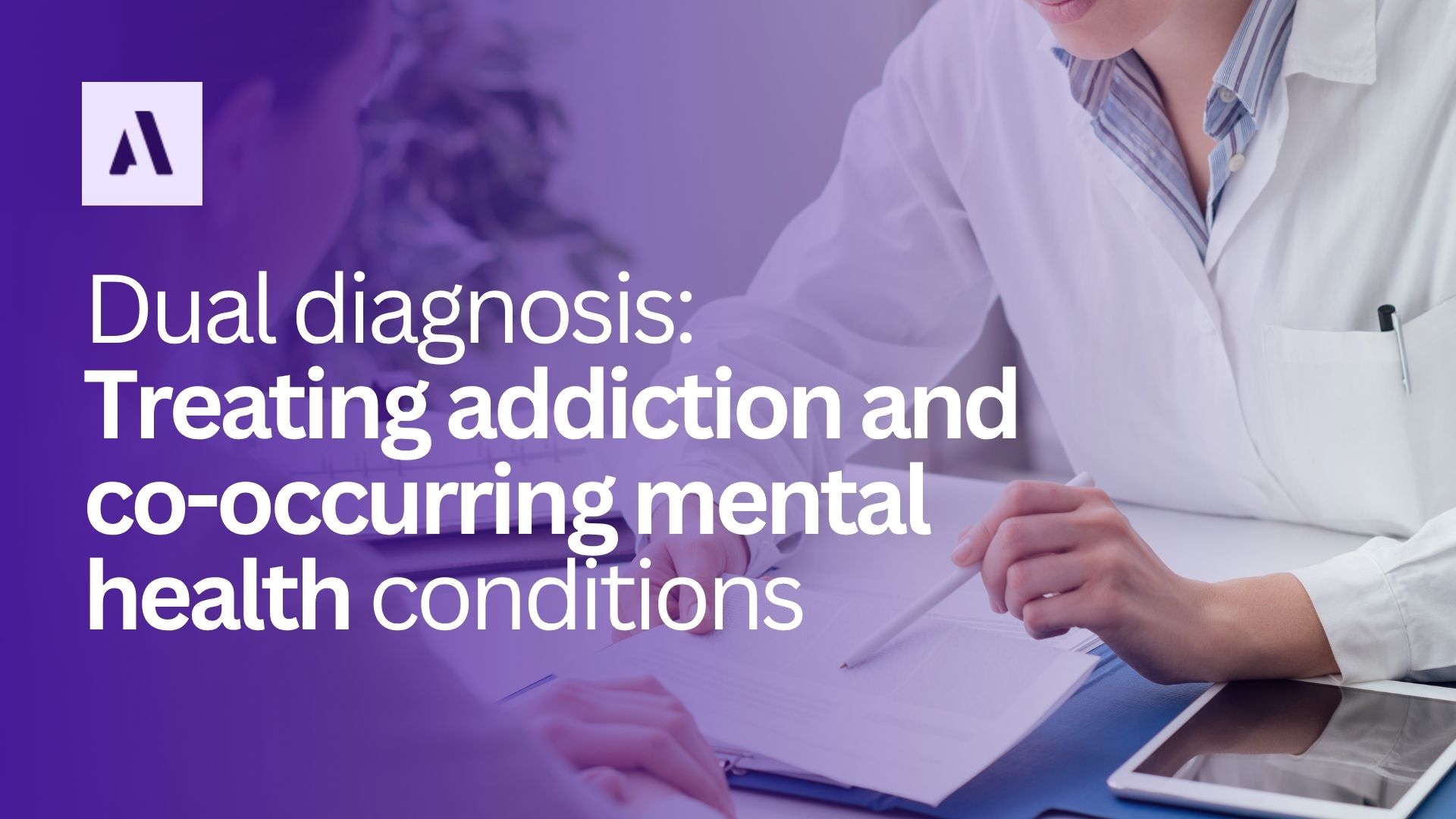

Are you concerned that you or a loved one may be struggling with addiction? Some people who are living with addiction may also be struggling with low mood or a mental health condition. In this blog, we’re looking into dual diagnosis and treating addiction and co-occurring mental health conditions.
What is a dual diagnosis?
Dual diagnosis is a term used to describe the co-occurrence of a mental health condition and problematic substance use. It is sometimes also referred to as co-occurring disorders.
Dual diagnosis can involve problematic alcohol or drug use alongside conditions such as:
- Depression
- Anxiety disorders
- Post-traumatic stress disorder
- Bipolar disorder
- Psychosis or schizophrenia
- Personality disorders
When someone is experiencing co-occurring mental health and substance use difficulties, both must be recognised and appropriately addressed as part of their care.
Untreated or inadequately managed mental health difficulties can make recovery more challenging and may increase vulnerability to returning to substance use for some people. This is why recognising and addressing co-occurring needs is an important part of effective care.
Many people experience overlapping symptoms, which highlights the importance of a professional and thorough assessment of the individual. This can help healthcare professionals understand what the individual may be experiencing and identify the most appropriate support.
The good news is that recovery is possible, and integrated treatment can help ensure that both addiction and mental health needs are considered as part of care.
If someone is experiencing an acute mental health crisis or requires a level of psychiatric care that cannot be safely provided within a residential addiction setting, specialist NHS or hospital-based services may be more appropriate.
The relationship between addiction and mental health
In some cases, poor mental health can contribute to addictive behaviours. For example, someone with poor mental health may experience low mood or anxiety, and therefore like the idea of being able to escape from these negative emotions temporarily.
For some people, substances may temporarily reduce difficult emotions or psychological distress. Over time, however, repeated substance use can become problematic and may contribute to dependence or addiction.
Prolonged use of substances can lead to an increase in symptoms related to anxiety, depression, sleep problems, paranoia or other psychological symptoms.
Some substances can produce short-term changes in mood or anxiety, which may make them feel helpful in the moment. However, this effect is temporary and continued or heavy use can contribute to dependence and may worsen mental or physical health over time.
“Sometimes addiction is only part of the story. Your mental health matters too and both deserve care, understanding and support.” – Tina McCoy, Service Manager at Acquiesce Rehab.
Common signs of a dual diagnosis
- Changes in mood or behaviour
- Increased anxiety, depression or emotional distress
- Using alcohol or drugs to manage difficult feelings – this may indicate that someone is relying on substances as a coping mechanism
- Withdrawal from family, friends or usual activities
- Increasing tolerance or dependence
- Mental health symptoms becoming more severe alongside substance use
- Difficulty maintaining work, relationships or daily responsibilities
- Previous mental health treatment alongside recurring substance use
Many people may experience these signs day-to-day, and it doesn’t necessarily mean that a person is experiencing an addiction. However, it may be a sign to seek a professional assessment.
Why treating both conditions matters
For some people, the two conditions can reinforce one another, making recovery more difficult if only one issue is addressed. This means it is important to recognise and address both conditions, helping reduce the ways they may reinforce one another.
Untreated or inadequately managed mental health difficulties can make recovery more challenging and may increase vulnerability to returning to substance use for some people.
To support recovery from addiction and recognise a mental health condition, an integrated care approach must be taken. This means addressing the person holistically rather than focusing on separate symptoms.
Dual diagnosis in a private rehab setting
When you choose to access private rehab, you can benefit from a more personalised approach to your care. We start by having conversations, getting to know you, what you’ve been experiencing and chatting with you about ways we can help. We’ll cover a wide range of areas including:
- Substance use and addiction history
- Mental health history
- Physical health
- Medication
- Previous treatment and relapse history
- Family and social circumstances
- Trauma and significant life experiences
Whatever you’ve been going through, you should be treated with dignity and a non-judgemental approach. We ensure confidentiality from the moment you pick up the phone to enquire with us.
How is dual diagnosis treated?
While dual diagnosis may sound more complicated than a single diagnosis, it can be treated in many of the same ways. The important thing is to recognise and appropriately address both the mental health difficulties and substance use as part of the individual’s care. Dual diagnosis is not the same as cross addiction.
Medical support & professional treatment
Depending on the circumstances, healthcare professionals may assess physical health, mental health, substance use, withdrawal risk, medication and other factors that could affect treatment.
For some people, prescription medication may be suggested to help relieve symptoms. At this point, it would be helpful to discuss any other medications you take regularly with the healthcare provider.
Psychological therapy for mental well-being
Psychological therapies can form an important part of treatment for addiction and co-occurring mental health difficulties. The most appropriate approach will depend on the individual’s circumstances, symptoms and treatment goals.
Examples include cognitive behavioural therapy approaches, motivational interviewing, relapse prevention support, and other evidence-based therapies suited to the individual.
Detox support
Depending on the substance being used, the level of dependence and the individual’s circumstances, a medically supported detoxification may be recommended. Detox involves stopping or reducing substance use in a planned and appropriately supported way, with medical monitoring where required. This is particularly important where withdrawal could carry significant health risks.
Detoxification is not, by itself, a complete addiction treatment. It is usually the first stage of a wider treatment and recovery plan that may include psychological therapy, relapse-prevention work and ongoing support.
If you require detoxification for drug or alcohol dependence, we can discuss your circumstances and refer you to an appropriate detox service where necessary.
A key part of addiction treatment is recognising that everyone’s recovery journey is different and that recovery is not always a linear process. Recognising that there may be setbacks and some days which feel harder than others is important. This highlights the need for a robust relapse prevention plan, which you can refer back to anytime you need to during long-term recovery.
Holistic recovery support services
Along with learning more about your addiction triggers and experiences, it’s important to build healthier routines in other areas of life, such as sleep, nutrition, physical well-being, stress management, and emotional regulation. Hobbies can help, and so can spending time with loved ones who know when to offer support. We can help you build a strong, sustainable recovery plan.
What makes private rehab different?
Private rehab offers many benefits and can provide an excellent environment for those needing more intensive or personalised support. The main thing when searching for a rehab centre is that the individual feels comfortable there. What works for one person may not suit someone else. Here’s what you can expect from private rehab.
A structured residential environment away from everyday triggers
Our centre is based in Bolton, providing a residential setting away from many of the pressures and triggers of everyday life while remaining connected to the wider community.
One-to-one clinical support & personalised treatment plans
We ensure every client has a personalised treatment plan, so they receive the right level of support for their experiences rather than everyone else’s. Our clients have their own dedicated practitioner, providing continuity of support during their stay and, where applicable, as they transition back into everyday life.
We also only accommodate small groups of clients at once, meaning you can access more close-knit support for addiction.
A multidisciplinary approach to drug and alcohol addiction
Our team includes a range of professionals who excel in different areas of addiction recovery. This multidisciplinary approach can be particularly valuable when supporting people experiencing co-occurring mental health and substance use difficulties.
More privacy and discretion
All our rehab clients have their own private bedrooms, plus a communal lounge and kitchen for cooking their own meals. We recognise the importance of these home comforts and treat our clients with respect.
Dedicated time to focus on recovery
We provide each client with a timetable, giving them dedicated time to work on all areas of recovery, whether that be time for themselves, exercise, attending support groups, or completing activities such as mindfulness, meditation and reiki.
Support with planning the transition back into everyday life
Before clients leave our rehab centre in Bolton, we work closely with them to create a relapse prevention plan. This outlines healthy ways to cope with triggers and other cravings you may experience in the outside world.
Aftercare & ongoing support for long-term recovery
We have designed an exclusive member’s area for those who have experienced the transformative journey of Acquiesce. Clients have lifetime access and can share wins, challenges, and everything in between. Peer support can also provide an opportunity to connect with others who understand the challenges associated with addiction and recovery.
We also host weekly drop-in calls as part of our aftercare support. Clients have access to a phone number for their practitioners, who they can contact anytime when they return to daily life. Read our blog on why aftercare is just as important as rehab.
When to seek professional help for dual diagnosis
A person should seek professional help for dual diagnosis if the addiction is becoming hard to control or the mental health condition is interfering with everyday life. A common myth is that people need to reach a breaking point before they seek support for mental health issues and substance use, which is not the case at all.
If you’re worried about yourself or a loved one, it’s really important to seek support. Early intervention and appropriate treatment can provide support and may help prevent difficulties from worsening. You should encourage your loved one to access treatment for substance use disorder and seek appropriate support from mental health services.
How a private rehab clinic can help with substance addiction
Acquiesce can support people experiencing addiction alongside mental health difficulties, where their needs are appropriate for our service. We recognise the importance of addressing both in an integrated and coordinated way and helping you to build healthier habits that you can maintain into the future.
The most appropriate treatment setting depends on the individual’s mental health, substance use, physical health, level of risk and support needs. In some circumstances, a person may require specialist NHS mental health or hospital-based services alongside or instead of residential addiction treatment.
We provide personalised residential treatment designed to support recovery from addiction while taking your wider mental and physical wellbeing into account.
Every recovery journey begins with a conversation; start yours today. Contact us. We hope this blog has been helpful regarding co-occurring disorders.