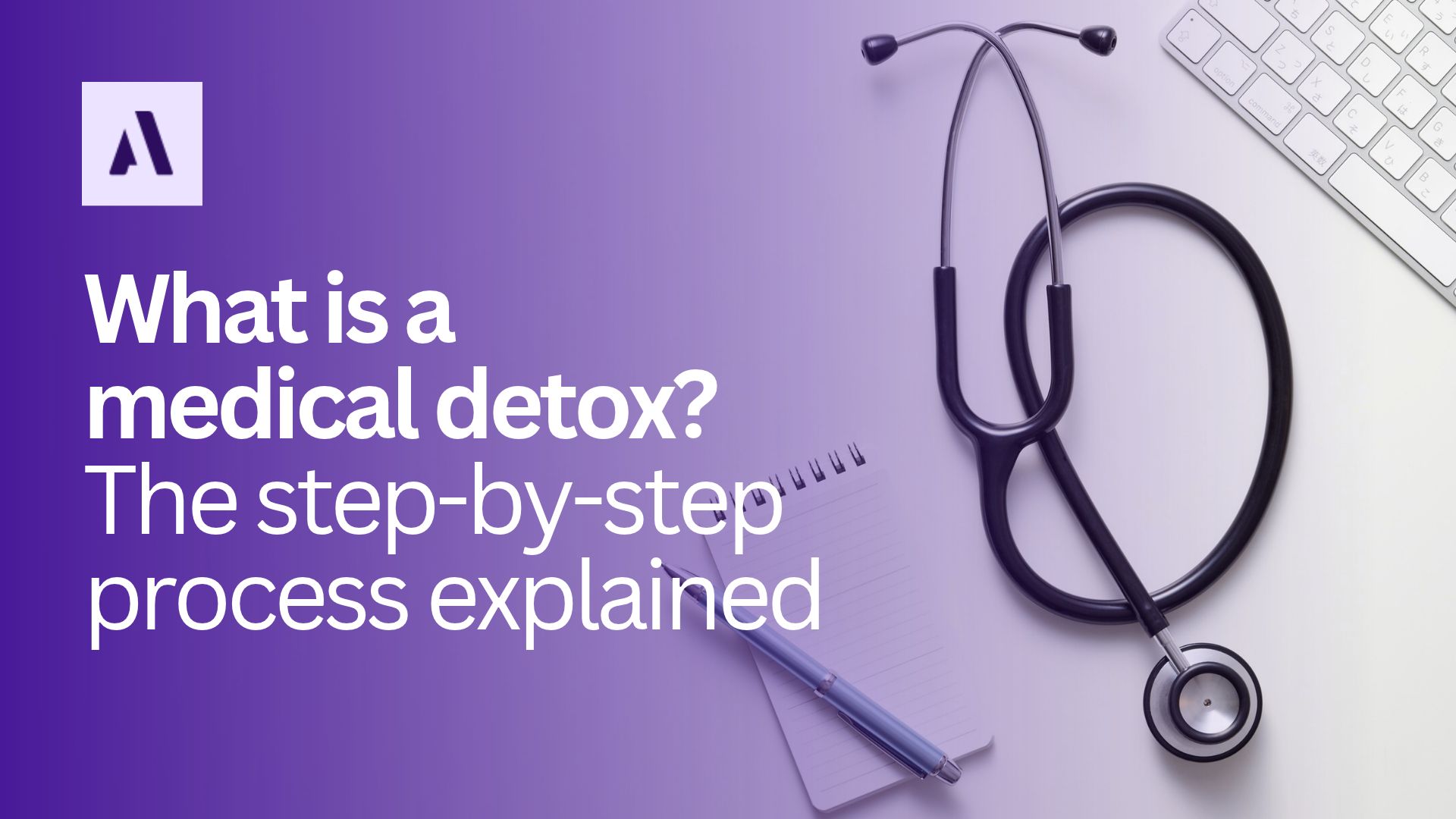

Some people who are living with addiction may benefit from a detoxification process; however, it is not always necessary. For those who need it, medical detox can be an important first step in addiction treatment. In this blog, we answer the question: What is a medical detox? We’ll explain the process step by step.
What is a medical detox?
Medical detox is a process that helps people stop using drugs or alcohol while managing withdrawal symptoms and related health risks. During a medical detox, healthcare professionals assess the individual’s needs, monitor their health and provide medication where appropriate to help manage withdrawal safely.
The process helps manage the physical effects of dependence and withdrawal. However, detox alone does not treat all aspects of addiction, and further support may be needed for long-term recovery.
A physical dependence does not occur with all drugs and substances, and it generally means that the body becomes physically dependent on the drug, which causes withdrawal symptoms when it is no longer in the system.
Alcohol can cause physical dependence when someone regularly consumes it over a prolonged period. Other substances, including opioids and certain prescription medications, can also cause physical dependence. Nicotine can cause dependence too, with withdrawal symptoms when someone stops using it.
Different substances can cause different types of dependence and withdrawal symptoms. Cocaine and cannabis can cause psychological dependence and may also cause withdrawal symptoms when someone stops using them. These symptoms vary between individuals and may include mood changes, sleep disturbances and cravings. Caffeine can also cause withdrawal symptoms, such as headaches, fatigue and difficulty concentrating.
For those experiencing physical dependence, seeking medical advice before stopping or reducing substance use is important. Suddenly stopping alcohol or certain drugs, particularly benzodiazepines, can cause serious and potentially life-threatening withdrawal symptoms. In these cases, medical supervision may be necessary to help manage withdrawal safely. Read our blog on alcohol detox at home: is it safe?
What is the medical detox process?
Step 1: Initial assessment
Before medical detox can begin, professionals must ensure the individual is stable. If they are not, they may require specialist medical care in hospital. If a person is experiencing an overdose, this is a medical emergency and you must call 999.
As part of this assessment for inpatient detox programmes, the individual will be asked about their medical history, substance use and individual needs. They may also ask about the individual’s mental health to identify any underlying conditions and determine what support they may need. This helps the team prepare a plan that will truly work for the individual and accounts for any health risks and severe withdrawal symptoms they may experience.
Step 2: Creating a personalised detox plan
Once professionals have identified the individual’s needs and discussed their history, they can start working on a personalised detox plan. This will take into consideration all of the information provided and be set over a realistic timeframe for drug or alcohol detox.
Step 3: Managing withdrawals and medical supervision
As we mentioned previously, those with a physical dependence are likely to experience physical withdrawal symptoms, which can sometimes be difficult and dangerous to manage alone. With this in mind, an inpatient detox team will monitor the individual throughout the process, with the level of supervision tailored to their needs.
Step 4: Monitoring and medication management
As the detox progresses, the individual will be monitored for changes in withdrawal symptoms, with medication and support provided where appropriate. During this period, the inpatient detox team will regularly check in with the individual on both their physical health and mental well-being.
Step 5: Planning the next stages of addiction treatment
An individual’s recovery journey doesn’t start and end with a detox. Instead, a person should continue working towards recovery by attending a rehabilitation clinic. These clinics help individuals learn tools and techniques to manage triggers and support long-term recovery.
At this point, an individual may already have a rehab clinic lined up, or they may need to find one for further treatment.
“Detox is not the end goal – it’s the first safe step toward a new beginning.” – Tina McCoy, Service Manager at Acquiesce Rehab Centre.
How long does a medical detox take?
There is no set time frame for medical detox, as it depends heavily on the person and what they are going through. Those with severe addictions may need to attend the detox clinic for longer.
Many factors should be considered when deciding how long to attend, including the individual’s health, the substance used and the level of dependence the person is experiencing. The good news is that the individual will be in the right place to receive dedicated support for recovery from harmful substances.
Common withdrawal symptoms during medical detoxification
Common withdrawal symptoms from drugs or alcohol can vary depending on the substance used, how long someone has been using it and their level of dependence.
- Physical symptoms: Sweating, shaking or tremors, headaches, nausea, vomiting and muscle aches. In severe cases, alcohol withdrawal can cause seizures or delirium tremens, a potentially life-threatening condition.
- Psychological symptoms: Anxiety, irritability, low mood, agitation and difficulty concentrating
- Sleep disturbances: Insomnia, nightmares and disrupted sleep patterns
- Changes in appetite: Reduced appetite, stomach discomfort or digestive issues
- Intense cravings: Strong urges to use drugs or drink alcohol
- Fatigue: Feeling weak, exhausted or lacking energy
Common drug and alcohol withdrawal symptoms may differ based on a range of factors. Teams will work with individuals to reduce withdrawal symptoms from drug addiction or alcohol addiction.
Alcohol and benzodiazepine withdrawal can be dangerous without appropriate medical support. Anyone who may be physically dependent on these substances should seek medical advice before stopping suddenly. Seizures, severe confusion or hallucinations require emergency medical attention.
What happens after the detox programme?
Detox is only the beginning of the treatment plan and is often followed by rehabilitation. Rehab focuses on long-term support by teaching tools and techniques to aid recovery and allow the individual to gain a more holistic understanding of themselves.
At the end of the rehab journey, the team should work with the individual on a relapse prevention plan. This plan is the first port of call if the individual feels they are struggling in the outside world. Note that this is supposed to be used and does not mean that the person is failing.
Individuals who experience the transformative journey of Acquiesce have access to our exclusive members’ area, which essentially acts as a support group, enabling them to chat with others about challenges and successes in recovery.
Acquiesce Rehab Centre in Bolton is a private facility offering residential services. We use a range of therapy techniques, combined with activities such as gym sessions, yoga, Reiki, and more, to support individuals through their rehab plan.
We treat every person who walks through our doors with compassion, kindness and confidentiality. We create bespoke treatment plans because recovery isn’t one-size-fits-all.
Support for addiction
A medically supervised detox is really important if you are struggling with a physical dependence on drugs or alcohol. It means the substance can be removed from the body more safely, with direct monitoring.
At Acquiesce, we don’t offer direct detox services; however, we work closely with several trusted detox clinics in England. We stay in contact with clients during detox so they feel more at ease when they join us at our rehab centre.
If you’d like to discuss rehab and detox services, please don’t hesitate to contact us. We are more than happy to have a confidential chat and answer any questions you have about addiction treatment options. Seeking support early can lead to better outcomes for ongoing treatment.