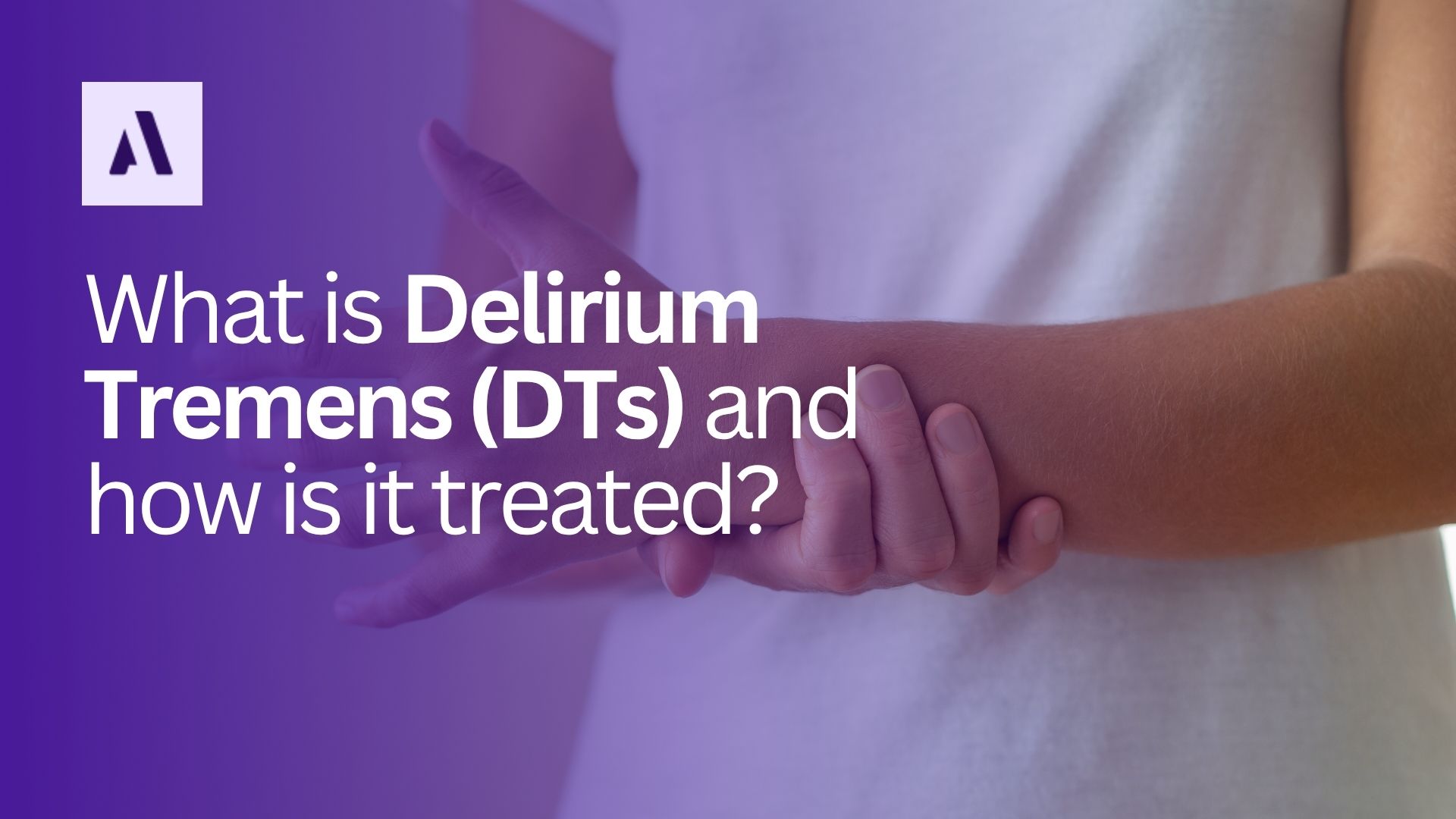

Delirium tremens, also referred to as DTs, is the most severe form of alcohol withdrawal syndrome. It causes intense changes to the nervous system and typically develops 48 – 72 hours after reducing or stopping heavy, prolonged alcohol use, although it can occasionally begin later (up to 5 days or more). It is recognised as a medical emergency.
In this article, we explain what delirium tremens is, its symptoms, causes, treatment options and how professional support can help during recovery.
What is delirium tremens?
Delirium tremens can be life-threatening, as it can cause significant changes in the nervous system. It typically occurs after a person suddenly reduces or stops drinking alcohol following prolonged heavy use. It is a severe complication of alcohol withdrawal, but it does not happen to everyone.
The condition is serious and requires hospital admission to ensure the correct care is given. Without treatment, DTs can lead to serious complications including seizures, dangerous heart rhythm disturbances, aspiration, severe dehydration and, in some cases, death.
“Delirium Tremens is a reminder that withdrawal can feel frightening and overwhelming, but you don’t have to go through it alone. Safe support can make all the difference.” – Tina McCoy, Service Manager at Acquiesce Rehab
What causes delirium tremens?
Long-term alcohol use suppresses activity in the central nervous system. Over time, the brain adapts by increasing excitatory activity. When alcohol is suddenly removed, the brain becomes overactive, resulting in severe withdrawal symptoms.
Not everyone who stops drinking after prolonged heavy alcohol use develops delirium tremens, but several factors can increase the risk.
- History of alcohol withdrawal episodes
- History of DTs
- Older age
- Poor nutrition
- Liver disease – read our blog on alcohol-induced liver damage
- Co-existing medical conditions
- Previous withdrawal seizures
- Very high alcohol intake
- Concurrent infection or illness
Delirium tremens timeline
It’s important to recognise that everyone has different experiences when it comes to alcohol withdrawal symptoms. If you do start to suspect delirium tremens, it’s crucial that you seek immediate medical attention.
6 – 12 hours after you stop drinking
- Anxiety
- Tremor
- Sweating
- Nausea
- Insomnia
12 – 24 hours after you stop drinking
- Worsening symptoms
- Hallucinations may occur
24 – 48 hours after you stop drinking
- Withdrawal seizures are most likely
48 – 72 hours after you stop drinking
- DTs commonly develop
72 – 120 hours after you stop drinking
- Symptoms may peak and continue
The duration varies among individuals, but DTs usually last 2-3 days, though some symptoms can persist longer. It’s vital that you continue monitoring your symptoms and seek medical attention if necessary. It’s better to get support if you are ever unsure or concerned you have developed delirium tremens, as you may need medical treatment for alcohol dependence.
Common symptoms of delirium tremens
Physical symptoms of delirium tremens
- Severe shaking
- Heavy sweating
- Fever (increased body temperature)
- Rapid heart rate
- High blood pressure
- Dehydration
Psychological delirium tremens symptoms
- Confusion
- Agitation
- Severe anxiety
- Visual hallucinations & auditory hallucinations
- Delusions
- Disorientation
- Severe confusion
- Fluctuating level of consciousness
Emergency symptoms
- Seizures
- Loss of consciousness
- Extreme confusion
- Cardiovascular complications
Although DTs cannot always be prevented, the risk can be significantly reduced through medically supervised alcohol detoxification. Healthcare professionals can assess your withdrawal risk and prescribe medication to help prevent severe complications.
Is delirium tremens life-threatening?
Yes, delirium tremens can be life-threatening for some people who experience it. Seek immediate medical attention from a professional.
Without intervention, the outcome can be fatal, but it can also lead to a range of other complications, including:
- Alcohol withdrawal seizures
- Cardiac arrhythmias
- Respiratory failure
- Severe dehydration
- Electrolyte imbalance
Seeking medical advice early can greatly reduce the risks of these complications.
How is delirium tremens diagnosed?
Delirium tremens can be diagnosed in a multitude of ways. It’s important to be honest with the medical professional assessing you, as this helps them provide the most suitable support.
- Medical history
- Alcohol use assessment
- Physical examination
- Monitoring vital signs
- Blood tests
- Excluding other neurological conditions – read our blog on alcohol related brain damage vs dementia
How is delirium tremens treated?
The treatment required for delirium tremens depends on the severity of the symptoms.
Medical detox
Medical detox involves continuous monitoring by healthcare professionals while the body clears alcohol naturally. Medication can be prescribed to manage withdrawal symptoms, reduce the risk of complications and ensure the detox is as safe and comfortable as possible.
Medication
For some individuals, medication may be prescribed. This can help you manage the symptoms you are experiencing and reduce the risk of them worsening. Some medications can include:
- Benzodiazepines
- Antipsychotics (occasionally and cautiously if needed for severe agitation, alongside benzodiazepines, but not as first-line treatment)
Supportive treatments
- IV fluids
- Thiamine
- Electrolytes
Ongoing monitoring of severe withdrawal symptoms
People at risk of severe alcohol withdrawal require close monitoring so that any signs of delirium tremens or other complications can be identified and treated promptly. Monitoring typically includes:
- Heart rate
- Blood pressure
- Oxygen levels
- Seizure monitoring
- Mental state assessments
Why you should never detox from alcohol alone
It is never recommended that individuals detox from alcohol at home if they have a physical alcohol dependence. Those who suspect any form of alcohol addiction should ensure they speak to a medical professional as soon as possible. Detoxing at home with a physical dependence can be life-threatening and should not be attempted.
It’s worth remembering that delirium tremens can be unpredictable and the symptoms can escalate rapidly. Many people underestimate severe alcohol withdrawal symptoms and the risk, but you must seek medical help.
Anyone who drinks heavily every day or has previously experienced withdrawal symptoms should seek medical advice before stopping alcohol suddenly. Read our blog on alcohol detox at home.
What happens after detox?
Detox is only the beginning of this journey, and it’s essential to address the underlying causes of the addiction. This can be achieved through rehabilitation.
A combination of therapies, including cognitive behavioural therapy (CBT) techniques and relapse prevention planning, can help a person to understand their triggers better and begin the process of recovery from addiction. Rehab also teaches individuals about prevention planning and recognising triggers before they lead to addictive behaviours. Read our blog on the signs of high-functioning alcoholism.
How a private rehab centre can help
A private rehab centre is a great way to gain a better understanding of your lifestyle and build healthier habits for the future.
Medical detox in a safe environment
Acquiesce works with trusted, local detox centres to help individuals overcome their initial addiction. During the detox, we’ll be in touch to discuss your rehabilitation plan, ensuring that you feel at ease and ready when you join us.
While we work alongside centres, we don’t have any preferred providers, so you can choose your own detox provider to suit your needs, and we can provide logistical support if required.
24-hour clinical supervision
Our clients receive 24-hour clinical supervision to help ensure their safety throughout detox and rehabilitation.
Personalised treatment plans
We understand that there is no one-size-fits-all approach when it comes to addiction. We ensure that every client is treated fairly and has access to their own personalised treatment plan.
Evidence-based therapies for alcohol use disorder
Our team is highly professional and qualified. They have the skills and experience to provide evidence-based therapy techniques to help you overcome your addiction safely.
Comfortable surroundings
All of our treatment is provided at our residential rehab centre, allowing you to escape daily stresses in a peaceful setting close to Bolton. We have excellent facilities, including private rooms, kitchens for cooking your own meals, and stunning grounds.
Confidential, personalised care
Every aspect of your treatment is confidential and tailored to you.
Aftercare and relapse prevention
We offer excellent aftercare and relapse prevention services, including a contact number for you to use following treatment, regular check-ins and an exclusive member’s area, designed specifically for people who have experienced the transformative journey of Acquiesce.
We are passionate about supporting clients to overcome alcohol addiction. If you’re concerned about yourself or someone else, please pick up the phone.
If you or someone you love is worried about alcohol withdrawal or may be at risk of delirium tremens, don’t attempt to manage symptoms alone. Seek urgent medical attention if severe withdrawal symptoms develop, and speak with our team about safe detoxification, rehabilitation and long-term recovery support.
FAQs
Can delirium tremens be fatal?
Yes. Without treatment, DTs can become life-threatening. Prompt medical care significantly improves outcomes.
How long do delirium tremens last?
Most cases last between two and three days, although some symptoms may continue for longer.
Can delirium tremens be prevented?
The risk can often be reduced through medically supervised alcohol detox, where medication and monitoring help prevent severe withdrawal complications.
Who is most at risk of DTs?
People with long-term heavy alcohol use, previous withdrawal episodes or seizures, poor nutrition and certain underlying health conditions are at greater risk.
This article is for informational purposes only and should not replace professional medical advice. If you or someone else is experiencing severe alcohol withdrawal symptoms, seek emergency medical attention immediately.