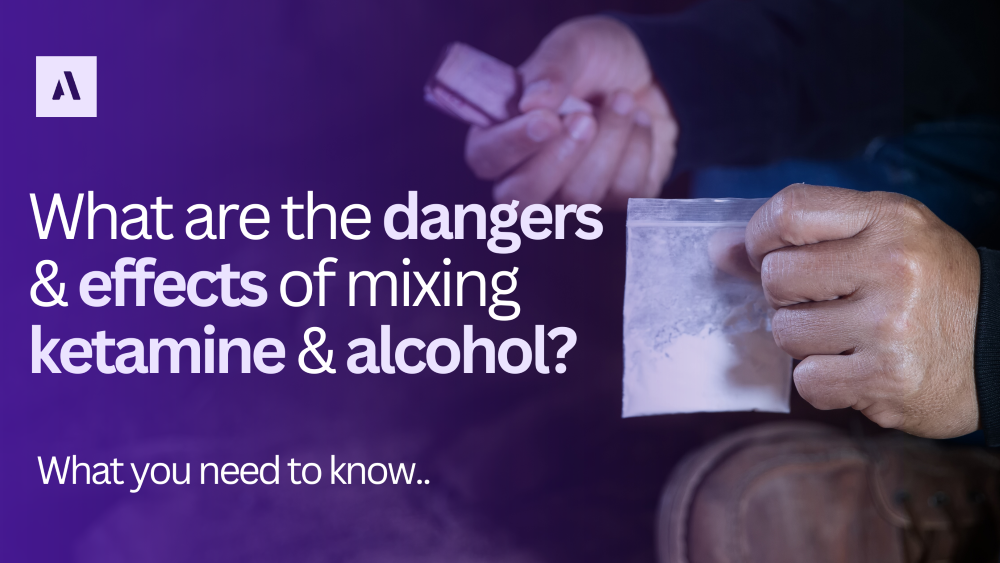

There are many risks involved when taking drugs, and these risks tend to increase when alcohol is added to the mix. In this blog, we’re answering the question, what are the dangers and effects of mixing ketamine and alcohol?
What is ketamine?
Ketamine is a drug that was previously used for animals. Now, ketamine may be prescribed to help with symptoms of depression or for anaesthetic use. Ketamine is only safe to use when it has been prescribed by a medical professional.
More recently, ketamine has been sold illegally on the streets. Illegal ketamine can come in many forms, including white powder or dissolved in liquid.
Illegal ketamine tends to make people detach from the world around them. This can cause problems with coordination and senses. Find out more about ketamine rehabilitation.
What is alcohol?
Alcohol is a liquid containing ethanol. Different alcoholic drinks contain varying percentages of ethanol, which indicates how strong they are. For example, a beer may have an ABV (alcohol by volume) of 4.6%, whereas a spirit usually has an ABV of around 35 – 40%.
Alcohol is known to be a depressant, as it heavily affects the brain. More specifically, it impacts the part of the brain that is responsible for your inhibition, which is why many people experience changes in themselves when drinking.
In the moment of drinking, alcohol can make people feel less anxious and more confident. However, it’s a common theme that this is short-lived. For many people, their anxiety and low mood become worse after they have been drinking. Find out more about alcohol rehab.
What happens if I have too much alcohol or ketamine?
When it comes to alcohol, the body takes around one hour to process one unit of alcohol. As alcohol consumption increases, so does the body’s blood alcohol concentration (BAC). If a person’s BAC becomes too high, they may be at risk of alcohol poisoning. You must seek immediate medical support if you are worried about alcohol poisoning in yourself or someone else.
As with other drugs, if you have too much, you are at risk of an overdose. There is no set scale of when you may experience a ketamine overdose. Instead, it’s about your personal tolerance levels. You should be aware of the signs of a ketamine overdose.
- Signs of unconsciousness
- Shallow breathing or slow breathing (respiratory depression)
- Not breathing
- Low blood pressure
- Slow heart rate
- Cardiac arrest
- Seizure
A combination of ketamine and alcohol overdose may be much more serious. Ketamine and alcohol addiction can be very dangerous for the body. Read our blog on: how long does ketamine stay in your system?
Is it safe to mix alcohol and ketamine?
It is not safe to mix ketamine and alcohol together. Doing so can have many long-lasting effects and can even be life-threatening. You should never mix the two substances. Read our blog on the dangers of ketamine abuse.
What happens to the body when you mix alcohol and ketamine?
These side effects occur soon after you mix the substances and may worsen if you continue or as the body processes the substances.
- Increased blood pressure
- Increased heart rate
- Heightened body temperature
- Inability to move properly/impaired motor function
- Seizures
- Nausea and vomiting
- Poor decision making
Additionally, someone who has mixed ketamine and alcohol is likely to have impaired judgement, poor coordination and may be irrational. They may also experience even more serious side effects, such as vomiting, breathing difficulties, paranoia and collapsing.
If you or someone you know is experiencing these side effects from alcohol or ketamine use, then you absolutely need to seek medical support.
What are the long-term dangers of mixing alcohol and ketamine?
As you probably already know, there are many dangers of using alcohol and ketamine. However, when these substances are mixed, things only become more severe.
Ketamine bladder syndrome
Ketamine bladder syndrome is very serious and occurs when the walls of the bladder become inflamed and irritated. Breakdown products of ketamine can cause this syndrome and other urinary tract issues to occur. Signs of the syndrome can include the following.
- Pain when urinating
- Increased urinary frequency
- Blood in urine
- Incontinence
- Feeling desperate for the toilet shortly after using it
- Waking in the night to urinate
- Lower abdominal pain
There is no cure for ketamine bladder, and often, the damage is so great that people need to have their bladders removed. The only way to reduce the risks of this is to stop taking ketamine.
Liver disease
The liver is responsible for many jobs when it comes to alcohol and drug use. The liver takes care of detoxification and metabolising the substances. When it comes to alcohol and drug abuse, fatty liver disease and scarring can occur. When both substances are used together, the risk of liver disease is significantly increased.
Kidney disease
When you mix alcohol and ketamine, you put excess stress on the liver, which means that other organs, such as the kidneys, have to work even harder. Excessive alcohol use can lead to problems such as kidney disease and failure.
Cardiovascular issues
Substance abuse impacts the cardiovascular system heavily, as you’ll notice that most either speed up or slow the heart rate. This means that the whole cardiovascular system must work much harder when subjected to both substances simultaneously. This increased work can lead to cardio emergencies and stroke.
Cancer
Drugs and alcohol abuse naturally increase your risk of developing different types of cancer.
Mental health issues
Those who experience poor mental health may notice that their symptoms are exacerbated when they take drugs or drink alcohol.
Even those who otherwise have good mental health may experience negative effects on their mental well-being due to changes in brain chemistry when people mix ketamine and alcohol.
Alcohol and drugs have a big impact on the central nervous system and the brain’s reward system, impacting dopamine and serotonin levels.
Signs of addiction
There are many signs of addiction that you should be aware of. Addiction to either of these substances is unlikely to get better on its own.
- Experiencing withdrawal symptoms
- Continuing use despite experiencing consequences
- Increased tolerance
- Neglecting responsibilities
While you may not notice these things in yourself, the people around you might. They may start a conversation with you about how they feel and how they can help.
I need help with my ketamine and alcohol addiction
If you believe you are experiencing addiction, then you must seek the right support. An alcohol addiction may require a detox, depending on the levels you are drinking at. It’s very important that you do not stop drinking at home on your own. This should be done in a controlled environment with experts on hand. We can organise a detox for you.
We use various techniques to help you build healthier habits. Our team of experienced professionals, including therapists and support staff, are here to support you on your journey to long-term sobriety for a ketamine addiction, alcohol addiction or both. Our rehab centre in Bolton has been rated ‘Outstanding’ by the CQC.
Are you ready to start your journey to happiness and freedom from addiction? Contact our friendly team for professional and confidential advice.
We were recently interviewed by ITV about the rise in adults starting treatment for ketamine addictions.