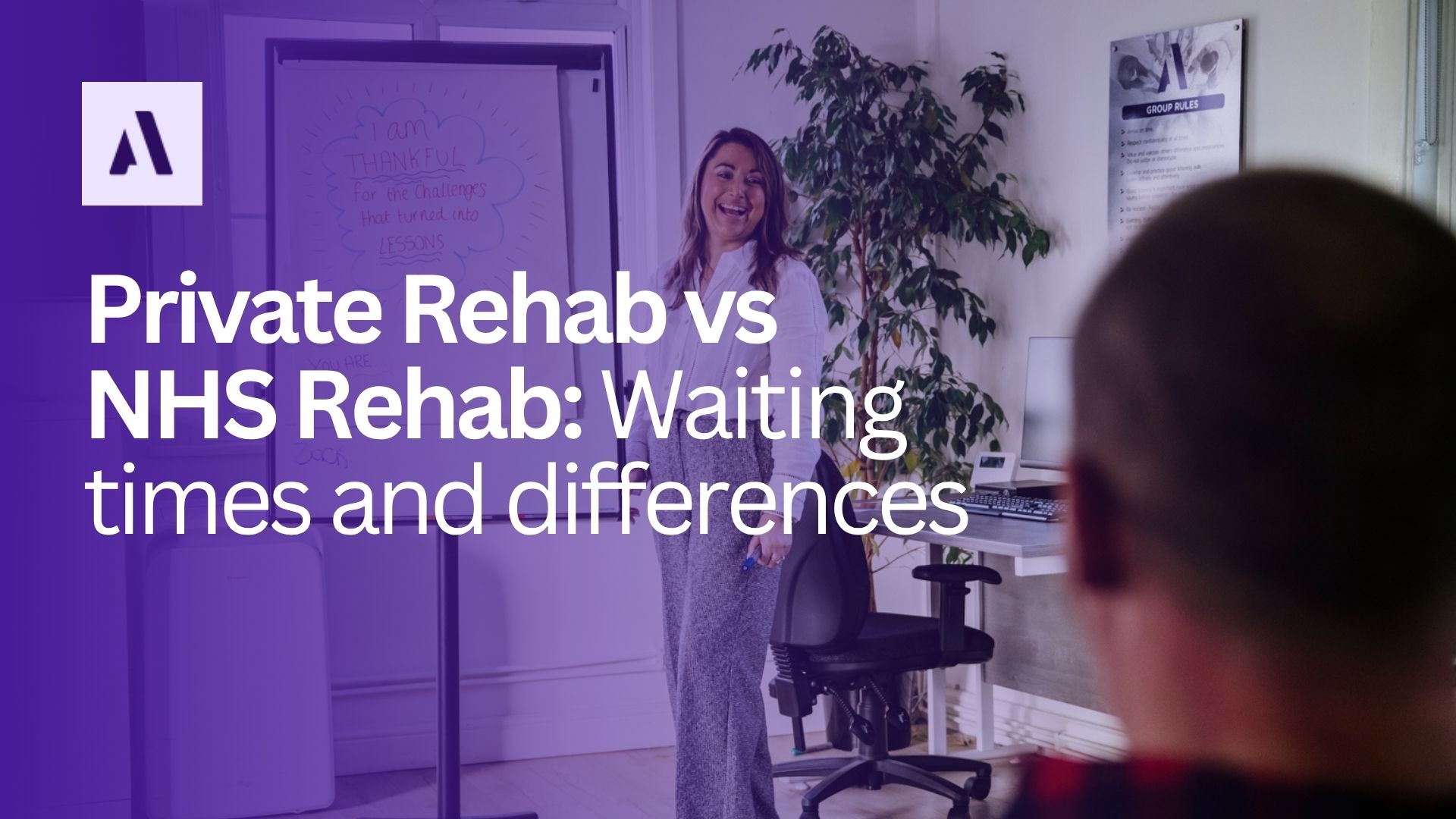

It will likely come as no surprise that there are major differences in NHS-funded and private addiction treatment in the UK. While public care can be high quality, waiting times can vary depending on location and service demand. In this blog, we’re looking into private rehab vs NHS rehab, focusing on wait times and differences in care.
In the UK, addiction treatment can be accessed through NHS-funded services (often delivered by commissioned providers) or through private residential rehab centres.
What is private rehab?
Private rehab (also known as private residential rehab) is funded by the individual. Private centres often have the capacity to provide 24/7 care, therapy support and more.
In most cases, clients will work closely with a practitioner to determine the best course of treatment for them. We provide all clients with a personalised plan, giving them time to learn vital new skills and relax, both of which we believe are crucial for treatment success.
Clients are also invited to join a licensed therapist who can help them explore CBT techniques, which are important when the client leaves the centre and continues their sobriety. Read more about CBT for addiction.
A range of addictions can be treated in private rehab, including the following.
- Alcohol addiction
- Ketamine addiction
- Cocaine addiction
- Gambling addiction
- Heroin addiction
- Prescription drug addiction
What is NHS rehab?
NHS-funded addiction services are often delivered in community settings, although residential rehab may be available in some cases through commissioned providers.
In contrast, NHS-funded treatment is free at the point of access for the individual, although patients may face longer wait times.
In most cases, patients are expected to begin the process by talking with their GP or local drug and alcohol services. They may be referred for community-based support or, in some cases, residential treatment through a commissioned provider.
Private rehab vs NHS rehab: Key differences
When deciding between private rehab and NHS-funded addiction services, it’s important to understand how they differ in practice. Below are some of the key areas to consider.
Waiting times
Private rehab services can often offer admission within 24–48 hours, allowing individuals to access support quickly.
In contrast, NHS-funded services may involve waiting times that vary depending on location and demand. Initial assessments can happen relatively quickly, but access to structured programmes or residential rehab placements can take longer.
Treatment setting
Private rehab is typically delivered in a residential setting, where individuals stay on-site for the duration of their treatment. This provides a structured and immersive environment focused entirely on recovery.
NHS-funded services are more commonly delivered in community settings, where individuals attend appointments while continuing to live at home. Residential rehab may be available in some cases, but access is often limited.
Level of support
Private rehab centres often provide intensive, round-the-clock support, including 24/7 medical supervision and regular access to therapists. Treatment plans are usually highly personalised.
NHS-funded services can also offer valuable support, including keyworker guidance and talking therapies. However, the level of intensity may be lower due to higher demand and limited resources.
Cost
Private rehab is funded by the individual, which means there is a financial cost involved.
NHS-funded addiction services are free at the point of access, making them a more accessible option for many people.
Access to residential treatment
Access to residential rehab is typically immediate through private providers, subject to availability and suitability.
Through NHS-funded pathways, residential treatment is usually accessed via referral and assessment, and may only be offered in certain cases where it is deemed necessary.
Flexibility and personalisation
Private rehab programmes are often tailored to the individual, with flexible treatment plans that can adapt to specific needs and preferences.
NHS-funded services follow structured care pathways, which can be effective but may offer less flexibility in how treatment is delivered.
Why choose private rehab treatment?
There are several reasons why you might want to consider private rehab when dealing with addiction. Here are just some of the most important benefits of a private rehab programme.
- Fast, immediate care with private rehabilitation
- Some people feel they benefit from the intensive and structured environment of private rehab
- Specialised addiction support
- Avoid long wait lists
- 24/7 medical supervision during the recovery journey
- Personalised care plans
- Fewer patients in the supportive environment – more specialised care
Why choose NHS rehab services for substance addiction?
The main reason people choose NHS support for rehab is that it is free.
While the standard of care can be good, delays in accessing support can make it harder for some individuals to seek help at the right time. Many people experiencing addiction also face mental health challenges such as anxiety or depression. These may require additional support alongside addiction treatment.
Is my private rehab worth the investment?
While private rehab is funded by the individual receiving treatment, it may be a worthwhile option. Private rehab can offer a structured environment designed to support mental, physical and emotional recovery.
What to consider before choosing rehab
Both NHS-funded and private services can provide effective support, and the right choice will depend on individual circumstances.
When deciding whether to choose private or NHS rehab, it’s worth considering the following.
- Financial resources
- Severity of addiction
- Personal commitments
If you’re not sure, we recommend picking up the phone to our team, who will be more than happy to have a confidential chat with you about your options.
How much does private rehab cost?
We aim to provide affordable private rehab options compared to many UK providers. Please get in touch for all of our cost information.
Should I access rehabilitation for addiction recovery?
If you are concerned about addiction, then you should consider accessing rehabilitation support. Without support, many people find it difficult to overcome addiction on their own. Rehab means that you can gain long-lasting support, advice and skills to help you overcome your addiction.
Acquiesce rehab centre in Bolton is in a great location, far enough away from home to remove distractions, but close enough to real-life scenarios that you never feel shut away. This setup allows you to strike a balance between the two, enabling effective rehab treatment. We support people locally, nationally and internationally.
At Acquiesce, we believe that the journey to recovery is long and fulfilling. We provide excellent aftercare support, helping you stay on track long after you leave the centre. We have been rated ‘Outstanding’ by the CQC and have immediate availability for admission.
If you want to learn more about how rehab could support you, contact our admissions team today, who will be more than happy to help.