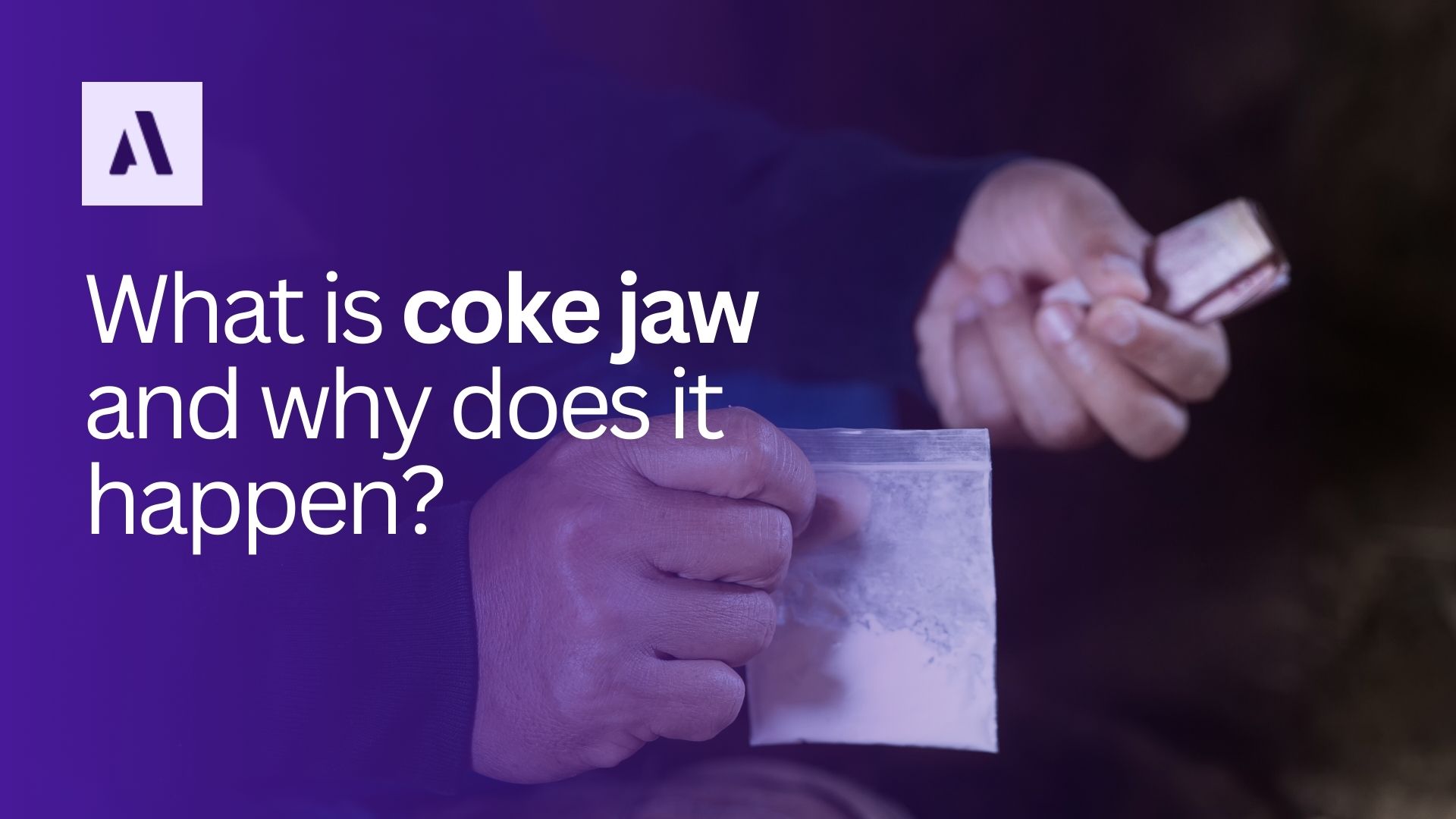

There are many side effects to be aware of when it comes to using cocaine. In this blog, we’re answering the question, what is coke jaw and why does it happen?
Cocaine is a highly addictive substance that can quickly take over a person’s life.
It comes from the coca plant and is mostly found in powder form, but can come in other ways.
This powerful stimulant drug gives users a sense of energy and euphoria, which they may enjoy. While the effects don’t tend to last very long, people commonly take more of the substance to maintain the high it provides. This often leads to cocaine addiction.
As we said previously, there are many unwanted side effects of taking cocaine. Some of these side effects are less known, such as coke jaw.
What is coke jaw?
Coke jaw is also known as cocaine jaw or coke mouth and refers to the side effect which causes different muscle movements in the lower half of the face. These movements are involuntary, and although they are common in the jaw, they can also occur in the neck.
The different forms of cocaine are typically taken in different ways, but cocaine jaw can occur from any of the different ways of taking the drug.
Cocaine jaw typically occurs in two ways. One way is that the jaw muscles become clenched, and the other way is that the jaw swings from side to side, commonly referred to as ‘rocking jaw’.
What does cocaine jaw look like?
The people around you are likely to notice if you are experiencing coke jaw. It can show up in many different ways and it’s important to be able to spot coke jaw symptoms.
- Jaw swinging from side to side
- Jaw clenching
- Facial tension
- Teeth grinding (bruxism)
- Dry mouth
- Visible signs of anxiety
Drug use can have an impact on a person’s mental health. Read our blog on: does cocaine cause anxiety?

Why does coke jaw happen?
Coke jaw happens as a result of chemical changes in the brain and central nervous system. Dopamine is the body’s reward hormone, which means people might feel more accomplished when more is released.
Cocaine blocks the reuptake of dopamine in the brain, leading to an accumulation of this neurotransmitter, which intensifies feelings of reward and contributes to involuntary muscle movements.
Cocaine also affects the body in other ways, for example, it causes the blood vessels to constrict, reducing their ability to pass healthy blood around the body. The jaw muscles could be affected as a result of poor blood flow.
It’s common for people to have increased energy following cocaine use. As a result, the body seeks ways to dissipate the energy more quickly. This can also cause a person to experience involuntary movements of the jaw.
When does coke jaw stop?
If you’re experiencing coke jaw, then it’s understandable that you want to find out how long it’s likely to last.
There is no exact time frame that you can expect the involuntary movements to last, as it depends on a number of factors. Some factors include how often you use the substance and how much of it you have.
Those who use cocaine more often may notice that they have these involuntary jaw movements for longer than someone who uses it less frequently.
Will my coke jaw go away?
For most people who use cocaine, cocaine jaw goes away reasonably quickly, for example, within a few hours. Some people can experience this side effect for much longer, for example, weeks or months.
What are the short-term effects of coke jaw?
Increased anxiety
The rush of hormones can lead to people feeling heightened anxiety when using cocaine and afterwards. Additionally, due to the rush of dopamine, the body can struggle to regulate hormones after you have taken drugs or alcohol.
Some people may also have feelings of embarrassment if others can tell they are experiencing coke jaw. Additionally, people may feel self-conscious about tooth decay and cocaine teeth grinding.
Oral problems
For some people, cocaine jaw can present as excessive teeth grinding, which can lead to cracked or chipped teeth. Cocaine abuse can also lead to tooth decay and dental erosion.
Jaw pain
When your jaw is moving uncontrollably, it can actually cause physical pain in the lower face.
Long-term effects of cocaine jaw
- Further dental problems
- Chronic pain
- Increased risk of gum disease and bleeding gums
- Mental health issues – read our blog on: is there a link between cocaine and depression?
- Strain on relationships
- Difficulty managing money and maintaining good performance at work

What should I do about coke jaw?
If you want to stop experiencing cocaine jaw, you need to stop using the substance. This is the only way to make it better.
It’s important to be aware of the symptoms of cocaine addiction, as it can escalate quickly. Here are some common signs of cocaine abuse to look out for.
- Common colds and nasal congestion
- Nosebleeds – cocaine abuse can damage the nasal cavity
- Hyperactivity
- Agitation
- Difficulty concentrating or focusing
- Insomnia
- Struggling to fulfil daily responsibilities, such as work
I need help with my cocaine addiction
Recognising that you need help with cocaine addiction is the first step to a happier and healthier life.
There is usually no requirement for a detox from cocaine, as the withdrawal symptoms are mainly psychological for cocaine use. The best step would be to start rehabilitation, which you can do with us at Acquiesce. Our programme offers a comprehensive approach to addiction treatment that includes behavioural therapy and aftercare support.
At Acquiesce, you will receive individualised care from experienced addiction support specialists. We work closely with you to create a personalised plan that meets your needs and helps you overcome challenges in your everyday life.
The programme is designed to help you overcome cocaine addiction and develop the skills and tools you need to maintain long-term sobriety.
We have been rated ‘Outstanding’ by the CQC and pride ourselves on our supportive environment and expert care for cocaine addiction treatment.
Are you ready to start your cocaine rehabilitation journey? Contact us today and see how we can help.