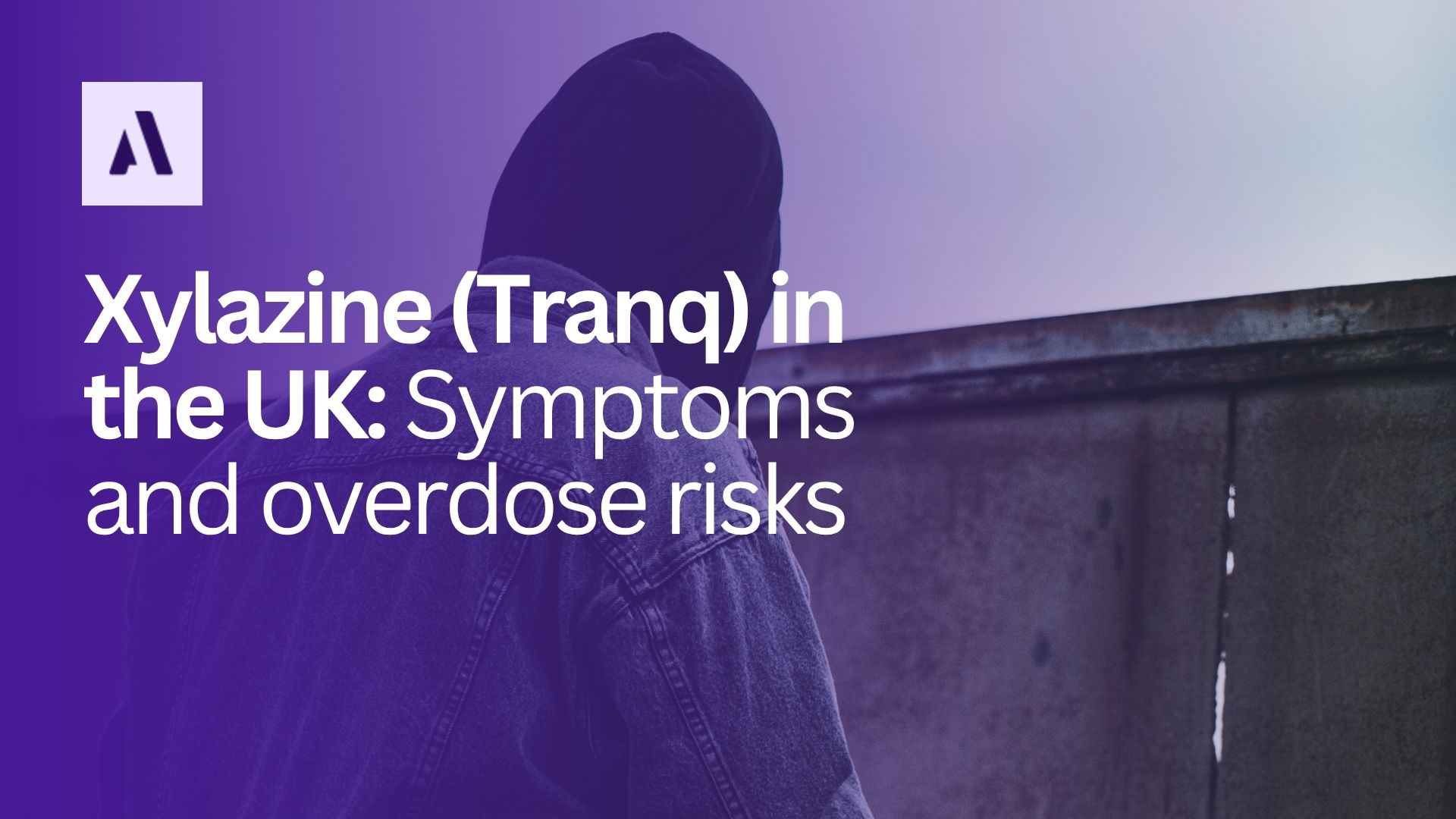

Xylazine, sometimes referred to as “Tranq”, is an emerging concern in the UK illicit drug market. In this guide, we explain what Xylazine is, how it can affect the body, the symptoms to watch for and what to do in an emergency.
If you or someone you love is struggling with drug use, there is support available.
What is Xylazine (Tranq)?
Xylazine, also referred to as ‘tranq ’, is a strong sedative which is commonly and legally used in veterinary medicine. It is not approved for human use in the UK. Xylazine is a central nervous system depressant that produces sedation and can reduce consciousness, heart rate and blood pressure.
Xylazine has been detected in illicit drug supplies and may be present alongside opioids and other substances. When combined with opioids, Xylazine may increase the severity and/or duration of sedation and respiratory depression. Xylazine itself is not an opioid.
What is Xylazine used for?
Xylazine is well known for being a tranquiliser, pain reliever and muscle relaxant and is used within veterinary medicine.
The drug sedates animals and provides muscle relaxation and pain relief during examinations and procedures. It can also be used to induce vomiting in certain circumstances.
In illicit drug supplies, Xylazine may be added to other substances to enhance or prolong their sedative effects. Because people may not know what an illicit drug contains, they may be exposed to Xylazine without realising it.
What does “Tranq” mean?
‘Tranq’ and ‘tranq dope’ are terms used to describe illicit drug mixtures containing Xylazine, particularly when it is combined with opioids.
Is Xylazine a problem in the UK?
Xylazine has entered the UK illicit drug market and is considered an emerging and growing concern. Further detections continue to be identified through UK drug-checking and surveillance systems.
The first reported UK death involving Xylazine was in May 2022. Xylazine was subsequently controlled as a Class C drug under the Misuse of Drugs Act 1971, with the legislation coming into force on 15 January 2025.
How does Xylazine affect the body?
As with many drugs, Xylazine affects the body in a wide range of ways. Some of the most common effects include:
- Sedation
- Drowsiness
- Reduced consciousness
- Reduced coordination
- Slowed heart rate
- Lowered blood pressure
- Respiratory depression, particularly when combined with opioids
- Loss of consciousness
“Some substances carry risks people aren’t aware of. Knowing the signs could help protect you or someone you love.” – Tina McCoy, Service Manager at Acquiesce Rehab Centre.
Why Xylazine is more dangerous when combined with opioids
When Xylazine is taken alongside opioids, its sedative effects may compound opioid-related sedation and respiratory depression, potentially increasing their severity and duration. This combination can therefore increase the risk of a serious, potentially life-threatening overdose.
What are the symptoms of Xylazine use?
Due to the often hidden nature of Xylazine, you must understand the symptoms that may be present to reduce the risks of medical emergencies.
Common symptoms
- Extreme tiredness or drowsiness
- Dizziness
- Weakness
- Confusion
- Poor coordination
- Slurred speech
- Reduced awareness
Severe symptoms of Xylazine exposure
- Very heavy sedation
- Difficulty staying awake
- Slow heart rate
- Slow or abnormal breathing
- Loss of consciousness
- Unresponsiveness
Many of these symptoms aren’t unique to Xylazine use and may be present due to other drugs. If you notice these severe symptoms, it is time to seek emergency support. Many of these symptoms occur due to the drug being a central nervous system depressant. Read more about our drug rehabilitation.
What does a Xylazine overdose look like?
Xylazine exposure can result in severe poisoning and, particularly when combined with other drugs, can contribute to a potentially life-threatening overdose.
The effects of Xylazine can vary depending on factors including the amount taken, how it was taken and whether other substances were involved. Severe sedation and respiratory problems can be life-threatening.
- The person cannot be woken
- The person does not respond normally to voice or touch
- The person’s breathing is very slow, shallow or abnormal
- The person loses consciousness
- The person collapses
- Their condition continues to deteriorate
What should you do if you suspect an overdose?
If you are worried and suspect an overdose, then you must act quickly.
- Call 999 immediately if the person is unconscious, cannot be woken or is not breathing normally
- Follow the emergency operator’s instructions
- Stay with the person and continue monitoring them until help arrives
- Tell the emergency team what substances may have been taken, if you know. This information can help healthcare professionals assess the situation and provide appropriate treatment.
Can Naloxone reverse a Xylazine overdose?
Naloxone is a medicine that can temporarily reverse the effects of an opioid overdose. It does not reverse Xylazine itself. However, because Xylazine may be present alongside opioids such as heroin or fentanyl, naloxone can still be important when an opioid overdose is suspected.
Can you become addicted to Xylazine?
Xylazine is frequently detected alongside other drugs. Someone who repeatedly uses illicit drugs containing Xylazine may therefore also be dealing with dependence or addiction to another substance.
If someone is struggling to control their drug use, a professional assessment can help identify which substances are involved and determine the most appropriate treatment.
What treatment is available for Xylazine and drug addiction?
Thorough assessment
Addiction treatment should always begin with a thorough professional assessment which recognises substance use history, physical and psychological health and other drug use. This assessment can help inform an appropriate treatment plan and provide risk management options.
Detox
For those dealing with a physical dependence, a medically supported detox may be necessary. This includes close monitoring by healthcare professionals and safe withdrawal management.
Rehabilitation
Rehab is a positive step toward recovery. Rehab provides a structured environment, professional 24-hour support and access to therapy. Treatment can address both the physical and psychological aspects of addiction, while providing the structure and support needed to begin recovery.
Therapy and relapse prevention
As part of your rehab journey, you may be introduced to various therapy techniques. These techniques can help you understand triggers, develop coping strategies and address underlying issues. A specialist rehab team can help you with relapse prevention by helping you build a recovery plan.
Aftercare
Aftercare is a significant part of rehab and recovery. At Acquiesce, you can count on continued support for relapse prevention and access to ongoing recovery resources, such as our weekly check-ins and exclusive members’ area. Read our blog on why aftercare is just as important as rehab.
When should you get help for drug use?
There are various signs a person may need to get help for drug use. It’s important to recognise that not all of these need to be present for you to access support.
- You regularly use drugs despite wanting to stop
- You need increasing amounts to achieve the same effect
- You experience withdrawal symptoms
- Drug use is affecting relationships or work
- Drug use is causing negative health effects or health complications
- You have experienced an overdose or near-overdose
- You don’t know exactly what substances you’re taking
- You feel unable to stop without professional support
We specialise in all types of addiction, including ketamine addiction, cocaine addiction, prescription drug addiction, MDMA/ecstasy, cannabis, alcohol, gambling and heroin at our private rehab centre in Bolton.
Our unique model prepares you for life beyond rehab by integrating your recovery into a real-world community setting, giving you the tools to manage the challenges and temptations of everyday life. With bespoke treatment plans, one-on-one support and group sessions, we help ensure your recovery is sustainable and long-lasting.
You don’t need to wait until a crisis point to get support. Professional treatment can help address physical dependence and the psychological aspects of addiction.
Start your journey toward a happier, healthier future. Contact our friendly admissions team today.