
It is often said that the first step to recovery is acknowledging your addiction and making the decision to stop.
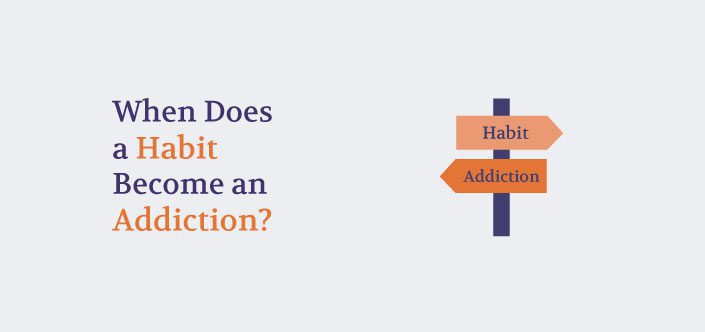
However, how can you acknowledge an addiction if you aren’t sure if you actually have one? At what point does a habit become an addiction?
In this guide, we’ll be explaining how you can tell the difference between a habit and an addiction and how to get the right kind of help.
What is the Difference Between a Habit and an Addiction?
A habit is a behavioural pattern that an individual can develop through frequent repetition of a certain task.
An addiction is when a behaviour or habit becomes compulsive, and an individual is unable to stop despite the negative consequences this may bring.
Addiction is much more complex than a habit due to the way in which it can change the brain’s structure and function, rewiring the reward circuit and leading to intense cravings. This makes it a chronic disease of the brain, whereas a habit is an automatic response of the brain which can be unlearned.
Do I Have a Habit or Addiction?
If you’re unsure if you have a habit or an addiction, there are some ways in which you can distinguish between the two.
To begin with, you should monitor how easily you are able to maintain conscious choice over the behaviour. If you find that you are able to control yourself and stop whenever you want, then you have a habit.
However, if the habit controls you and you find yourself becoming irritable, depressed and unable to function (either mentally, physically or both) without the behaviour, you likely have an addiction.
Another thing to think about is how the behaviour affects your life. If your habit is just something that you find annoying and has very little to no negative effects on your life, then it is simply a habit.
However, when a habit becomes damaging and has serious negative consequences on your relationships, job, health and finances, then it is likely an addiction.
Other Signs of Addiction to Look Out For
Psychological Symptoms
- Paranoia
- Defensiveness
- Agitation
- Poor judgement
- Feelings of hopelessness/diminished self worth
- Deteriorating existing mental disorders, depression anxiety, suicidal thoughts
Behavioural Signs
- Isolation or withdrawal from socialising and responsibilities
- Losing interest in hobbies or things that were once important
- Dishonest, secretive or manipulative behaviour
- Diminished performance/attendance at work
How to Prevent a Habit Becoming an Addiction
If you know you have a bad habit and you are concerned that it may develop into an addiction, there are some steps you can take to stop it before it gets any worse.
Breaking a Bad Habit Before it Gets Worse
1. Take small steps towards new patterns
Instead of quitting whatever habit it is you have cold turkey, you should aim to participate in the behaviour less and less frequently over time until you eventually stop.
For example, instead of completely stopping drinking alcohol each night, try limiting yourself to just 3 nights a week, then just at weekends and then eventually none at all or on special occasions.
2. Avoid the things that trigger your bad habits
Avoiding things that trigger your habit will remove the temptations. There are plenty of fun activities you can participate in that won’t encourage your habit.
For example, if you’re meeting up with friends, you don’t need to go to a pub or bar, you could get food together, have a games night or go to the cinema.
3. Replace old habits with healthier ones
If you can find a healthier alternative to your habit that doesn’t have as many negative consequences, you can replace your existing habit to create a new one.
How to Get Help with an Addiction
If you’re concerned that your habit may have become an addiction, get in touch with our team of recovery experts today at Acquiesce rehab.
Consultation
Addiction treatment at Acquiesce begins with a free, confidential consultation with a Recovery Practitioner in order to establish the individual’s needs and suitability for safe treatment with the service.
Once the correct treatment pathway has been established, all arrangements for a smooth and hassle free admission, including transportation, are made. Acquiesce then provides a safe and therapeutic environment which is conducive to the recovery from drug addiction.
Detox
To begin with, it is crucial for the individual to become substance free in a safe and healthy way.
At Acquiesce, all of our substance addiction treatments start with a detox to ensure the safe removal of substances from your system whilst helping to manage withdrawal symptoms.
The Programme
Our team of experienced professionals then delivers a combination programme of evidence based therapies which address the physical, psychological, social and spiritual aspects of drug addiction.
We utilise holistic therapies, Cognitive Behavioural Therapy, 12 Step approaches and fitness sessions.
Individuals will learn to understand their drug addiction and gain the knowledge and tools for an ongoing sustainable solution and recovery with our urban recovery model.
Our urban recovery model helps you to integrate into the community during your recovery, enabling you to return to everyday life in a safe and manageable way at the end of your treatment.
We do this because many individuals have found that the favourable conditions of rehabs such as manor houses in the countryside help with the initial detox but fail to prepare them for the reality of everyday life once they leave the rehab facility, leading to relapse.
We aim to make the transition as smooth as possible, mitigating the risk of a relapse and increasing your chances of a drug-free life moving forward.
Ongoing Aftercare Support
Upon completion of rehab treatment individuals will have a personal and comprehensive relapse prevention plan and on-going support that is provided as standard.
Get the Right Kind of Addiction Support Today
If you think you or someone you know may be suffering from an addiction, get in touch for a free confidential consultation to begin your recovery journey.